

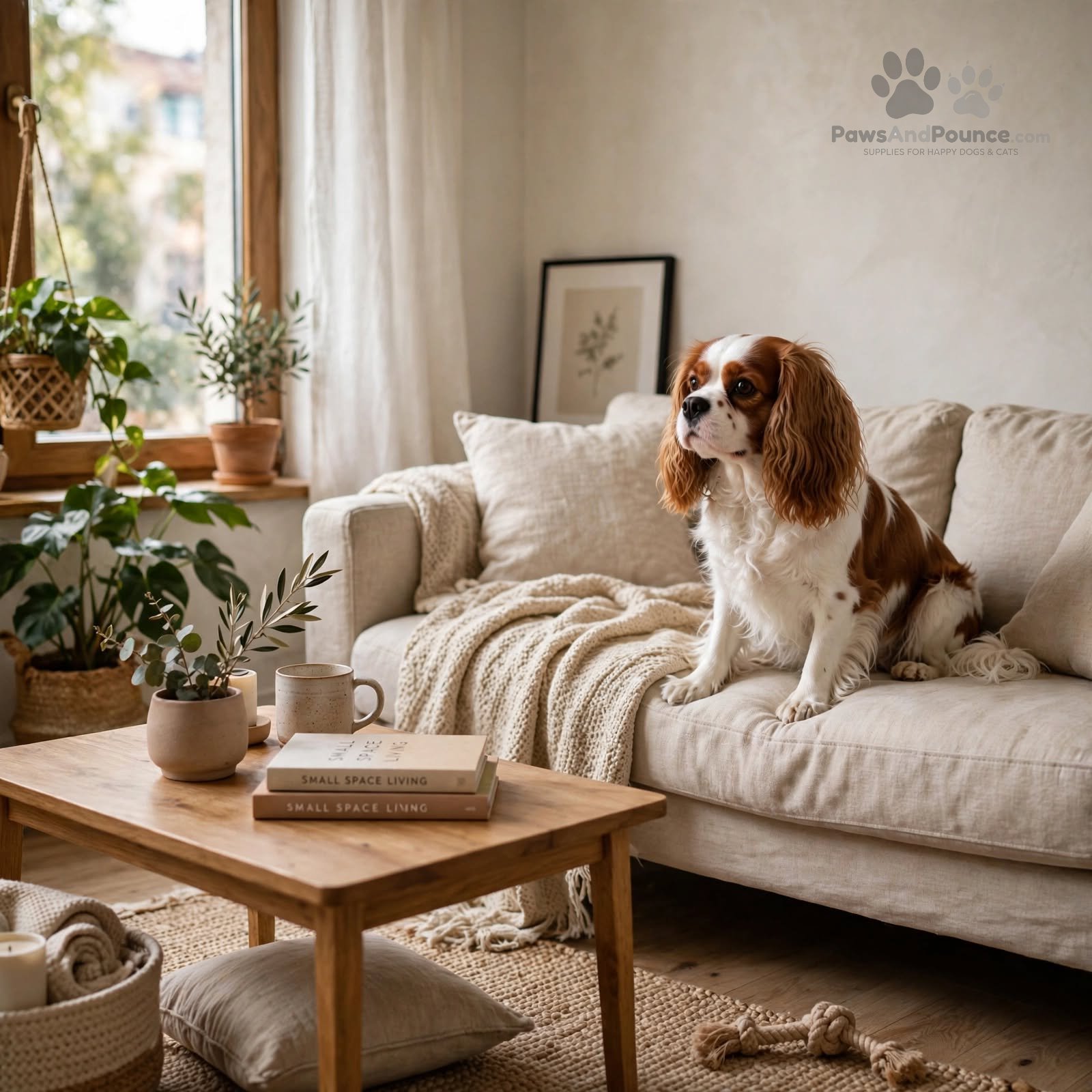
Living in an apartment or a small home does not automatically mean you should choose the smallest dog possible.
Some small dogs are highly energetic, vocal, or need much more stimulation than their size suggests. Others adapt more easily because they can settle indoors, enjoy staying close to their owners, and do not need a large yard to stay comfortable.
The better question is not simply, “Which dog is smallest?”
It is:
Which dog’s daily needs fit the way I actually live?
That means looking beyond size and considering four practical factors: noise, energy, grooming, and tolerance for being alone.
What Makes a Small Dog Good for Apartment Living?
A good apartment dog is usually one that can live comfortably indoors without needing constant access to a large outdoor space.
Size helps, but it is only one part of the decision. In a smaller home, barking, exercise needs, grooming, and daily routine can matter just as much.
The Apartment Fit Framework
Before comparing breeds, use these four factors:
| Factor | What to Ask Yourself |
|---|---|
| Noise | Is the breed likely to bark at hallway sounds, visitors, or neighbors? |
| Energy | Can I realistically provide the walks and play this dog needs? |
| Grooming | Am I comfortable with brushing, trimming, or professional grooming? |
| Alone Time | How well might this dog cope with my normal work and daily schedule? |
A dog that fits your routine in all four areas may be a better apartment companion than a smaller dog that does not.
1. Shih Tzu
Shih Tzus are small companion dogs that can adapt well to compact homes because they generally do not need large amounts of space.
They usually enjoy short walks, indoor play, and spending time near their owners. Their relatively moderate activity needs can suit people who prefer a quieter indoor lifestyle.
The main commitment is grooming. Their coat needs regular care whether it is kept long or trimmed short.
Apartment fit: strongest for quieter households that are comfortable with regular coat care.
2. Yorkshire Terrier
Yorkshire Terriers are tiny dogs, but they often have a lively and alert personality.
Their size makes them physically easy to accommodate in apartments, but barking can be a bigger issue than space. Hallway sounds, visitors, elevators, and neighboring doors may trigger alert behavior.
Training and consistent routines are especially useful in shared buildings.
Apartment fit: good for people who want a very small dog and are willing to work on barking and grooming.
Is a Yorkshire Terrier Good for an Apartment?
A Yorkshire Terrier can live comfortably in an apartment when it receives regular exercise, attention, and training.
Its size is convenient, but a Yorkie still needs daily walks, play, and mental stimulation. Small size does not mean low activity.
3. Cavalier King Charles Spaniel
Cavalier King Charles Spaniels are small companion dogs that are generally people-oriented and adaptable.
They often enjoy walks and play but can also settle comfortably indoors. That balance can work well in a smaller home.
They tend to enjoy close contact with their owners, so a household where someone is around much of the time may suit them particularly well.
Apartment fit: strong for people looking for a gentle companion that still enjoys daily activity.
4. Bichon Frise
The Bichon Frise combines a compact body with an outgoing personality.
They can live successfully in apartments when they receive daily exercise and interaction. Their size also makes indoor play easier than with larger breeds.
The main tradeoff is grooming. Their coat needs consistent maintenance.
Apartment fit: suitable for owners who want a sociable small dog and are comfortable with regular grooming.
5. Maltese
The Maltese is another very small companion breed that can adapt well to compact homes.
They do not need a large outdoor area and can combine short walks with indoor play. Their small size makes them convenient in apartments, especially where space is limited.
Their coat requires regular care unless it is kept short.
Apartment fit: best for companion-focused households that do not mind coat maintenance.
6. Pug
Pugs are compact dogs that generally do not need a large living area.
They often enjoy moderate walks followed by plenty of time relaxing indoors. This can suit apartment residents who want a lower-intensity companion rather than a highly active dog.
Because of their flat facial structure, owners also need to be careful with heat and strenuous exercise.
Apartment fit: suitable for quieter indoor lifestyles, with extra attention to temperature and health needs.
7. French Bulldog
French Bulldogs are commonly associated with city and apartment living because of their compact size and relatively moderate activity needs.
They usually do not need long-distance running or a large yard, although they still need daily walks and interaction.
Like Pugs, they are brachycephalic, so heat and breathing concerns should be taken seriously.
Apartment fit: physically well suited to compact homes, but health considerations are an important part of the decision.
8. Boston Terrier
Boston Terriers are compact but often playful and energetic.
They can adapt well to apartments when given regular walks and interactive play. For people who want a small dog that is a little more active than a traditional lapdog, they can be worth considering.
Apartment fit: a good match for owners who want a small dog but still enjoy daily activity.
9. Havanese
Havanese are small companion dogs that often enjoy staying close to their families.
They can adapt well to apartment life because much of their activity can be met through walks, play, and interaction rather than access to a large yard.
Their coat requires regular maintenance, and they may prefer households where they receive plenty of companionship.
Apartment fit: strong for people who spend substantial time at home.
10. Miniature Schnauzer
Miniature Schnauzers are small but often more energetic than their size suggests.
They can live well in apartments, but they benefit from structured exercise and mental stimulation. They can also be alert watchdogs, so barking may need active management.
Apartment fit: better for active owners than for people looking for a very low-energy companion.
11. Chihuahua
Chihuahuas require very little physical living space.
Their extremely small size makes them easy to accommodate, but personality varies considerably. Some are calm companions, while others may be very alert or vocal.
Early socialization and training can make apartment living easier.
Apartment fit: excellent in terms of space, but behavior and socialization matter a lot.
12. Toy Poodle
Toy Poodles are small, intelligent dogs with modest space requirements.
They can fit well into apartment life, but their intelligence means they need more than a small room and a short walk. Training, enrichment, and play are important for preventing boredom.
Their coat also requires regular grooming.
Apartment fit: very good for owners who enjoy training and interaction.
13. Pomeranian
Pomeranians are tiny dogs with energetic and alert personalities.
Their physical size is ideal for smaller homes, but they can be vocal. In buildings with shared walls, training around hallway noises and visitors may be especially important.
Apartment fit: good for people who want a lively small companion and are prepared to manage barking.
14. Japanese Chin
The Japanese Chin is a small companion breed that often does well in quieter indoor environments.
Its moderate activity needs can suit smaller homes, provided the dog still receives daily interaction and exercise.
For someone looking for a calmer companion rather than a highly athletic dog, this breed may be worth considering.
Apartment fit: especially suitable for calm households.
15. Italian Greyhound
Italian Greyhounds are slender, lightweight dogs that can adapt surprisingly well to smaller homes.
They enjoy short bursts of activity but are also known for spending plenty of time relaxing indoors. Regular exercise is still important.
Their thin build means they can be sensitive to cold weather.
Apartment fit: good for owners who want a quiet indoor dog that still enjoys daily movement.
What Is the Best Small Dog for Apartment Living?
There is no single best breed for every apartment household.
A quieter person may be more comfortable with breeds such as the Shih Tzu, Maltese, Japanese Chin, or Pug, while someone who enjoys more walking and training may prefer a Toy Poodle, Miniature Schnauzer, Boston Terrier, or Yorkshire Terrier.
The goal is not to find the smallest dog.
The goal is to find the dog whose noise, energy, grooming, and companionship needs match your lifestyle.
What Is the Calmest Small Dog Breed for an Apartment?
Several companion breeds are generally associated with calmer indoor behavior, including Shih Tzus, Cavalier King Charles Spaniels, Japanese Chins, and Maltese.
However, breed tendencies are not guarantees.
Age, individual temperament, training, health, exercise, and socialization all affect how calm a particular dog will be. In some cases, an adult dog with a known personality may be easier to evaluate for apartment life than a puppy.
What Dog Breed Is Best for Living in a Condo?
For condo living, noise and behavior can matter just as much as body size.
Shared walls, elevators, common hallways, and building rules make barking, social behavior, and routine especially important.
Before choosing a breed, ask yourself:
- How many hours will the dog be alone most days?
- How much walking time can I realistically provide?
- How much barking can my living situation tolerate?
- Am I willing to pay for professional grooming?
- Is the building easy to access with a dog?
- Are there pet-size or breed restrictions?
- Is there a practical outdoor toilet area?
- Do I want a calm companion or a more active dog?
These questions usually narrow the choice more effectively than size alone.
Small Dog Does Not Mean Low Maintenance
One of the most common mistakes when choosing a dog for a small home is assuming that a small body means an easy dog.
A Yorkshire Terrier may require substantial grooming. A Miniature Schnauzer may want more activity than expected. A Pomeranian may need careful barking management. A Toy Poodle may need significant mental stimulation.
The amount of space a dog occupies and the amount of work the dog requires are two different things.
Small Dog Breeds Compared for Apartment Living
| Breed | Noise Risk | Energy | Grooming | Main Consideration |
|---|---|---|---|---|
| Shih Tzu | Low–Moderate | Low–Moderate | High | Coat care |
| Yorkshire Terrier | Moderate–High | Moderate | High | Barking |
| Cavalier King Charles Spaniel | Low–Moderate | Moderate | Moderate | Companionship |
| Bichon Frise | Moderate | Moderate | High | Grooming |
| Maltese | Low–Moderate | Low–Moderate | High | Coat care |
| Pug | Low–Moderate | Low–Moderate | Low | Heat tolerance |
| French Bulldog | Low–Moderate | Low–Moderate | Low | Breathing/heat |
| Boston Terrier | Moderate | Moderate | Low | Daily activity |
| Havanese | Moderate | Moderate | High | Companionship |
| Miniature Schnauzer | Moderate–High | Moderate–High | Moderate | Activity/barking |
| Chihuahua | Moderate | Low–Moderate | Low–Moderate | Socialization |
| Toy Poodle | Moderate | Moderate | High | Mental stimulation |
| Pomeranian | High | Moderate | High | Barking |
| Japanese Chin | Low | Low–Moderate | Moderate | Health considerations |
| Italian Greyhound | Low | Moderate | Low | Cold sensitivity |
These are general breed tendencies, not guarantees for an individual dog.
How Much Exercise Does a Small Apartment Dog Need?
Living in a small home does not reduce a dog’s need for daily activity.
Most small dogs still need some combination of:
- outdoor walks
- sniffing and exploration
- indoor play
- training
- social interaction
- mental enrichment
The right amount varies by breed, age, health, and individual temperament.
For many apartment households, several shorter activities across the day may be more practical than relying on one long exercise session.
Puppy or Adult Dog: Which Is Easier in a Small Home?
An adult dog can sometimes be easier for apartment residents because its mature size, energy level, and personality are already easier to evaluate.
Puppies usually require more frequent toilet trips, training, supervision, and socialization.
In a high-rise building, even the practical question of how quickly you can reach an outdoor toilet area can matter.
A Simple Way to Choose the Right Small Dog
Use the Apartment Fit Framework one last time before making a decision.
1. Noise
Ask whether frequent barking would create problems with neighbors or shared walls.
2. Energy
Choose a dog whose exercise needs match the amount of activity you can realistically provide every day.
3. Grooming
Decide whether you are comfortable with regular brushing, trimming, and grooming costs.
4. Alone Time
Think about how often the dog will be by itself and whether that matches the breed’s typical social needs.
If a breed fits your home on all four points, it is more likely to be a practical match than a breed chosen mainly for appearance or size.
Final Thoughts
The best small dog for an apartment or small home is not necessarily the smallest breed.
A better match comes from balancing noise, energy, grooming, companionship, exercise, and your normal routine.
Shih Tzus, Yorkshire Terriers, Cavalier King Charles Spaniels, Bichon Frises, Maltese, Toy Poodles, and many other small dog breeds can all live successfully in compact homes under the right circumstances.
The most useful question is not:
“Can this breed live in an apartment?”
It is:
“Can my everyday lifestyle meet this dog’s needs consistently?”