


A Yorkshire Terrier may fit easily on your lap, but caring for one takes more than a small space. Yorkies are affectionate, alert little dogs with a terrier’s confidence. They can live in an apartment or a larger home when they get daily interaction, walks, training, and consistent coat and dental care. If you are considering the breed, look beyond the size: your grooming routine, tolerance for an alert dog, and ability to protect a very small companion matter more than your floor plan.
Yorkshire Terrier at a glance
| Trait | What to expect |
|---|---|
| Adult size | Around 7 lb (3.2 kg) and about 8 in (20 cm) tall, as a general breed reference; individual dogs vary. |
| Personality | Affectionate and confident, often energetic and vocal. |
| Activity | Daily walks, play, and mental stimulation despite the small size. |
| Coat | Fine, silky hair that needs regular brushing and trimming. A long coat takes more work than a short pet trim. |
| Home | Can suit an apartment if exercise, enrichment, and barking are managed. |
| Typical lifespan | Roughly 11–15 years; this is a population guide, not a prediction for an individual dog. |
Breed descriptions are starting points. Age, health, training, and the dog’s own personality matter more than a label when deciding whether a particular Yorkie suits your household. American Kennel Club: Is the Yorkshire Terrier Right for Your Lifestyle?

The three commitments behind a small dog
Yorkies are easy to accommodate in a small home, but that does not make them effortless to care for. Before focusing on a puppy’s looks, consider three commitments together:
- Coat and teeth: Can you handle frequent brushing, regular trims, and daily attention to dental care? A short haircut makes the coat more manageable, but it does not remove the routine.
- Activity and behavior: Can you provide walks, play, and patient training for a dog that may be energetic and vocal? A tiny dog still needs practice learning how to settle and respond to its environment.
- Safe handling: Can everyone in the home handle a toy-sized dog gently and supervise interactions with small children or much larger pets?
If one of these is difficult, address it before choosing a puppy. For example, a short pet trim can reduce coat work; it cannot solve a household schedule with little time for companionship. This is a practical decision framework, not a guarantee about any individual Yorkie’s temperament or health. AKC: Breed lifestyle · AKC: Grooming guide
How big does a Yorkshire Terrier get?
An adult Yorkshire Terrier is a toy-sized dog, commonly described by the American Kennel Club as about 7 pounds and 8 inches tall. Those numbers are useful for imagining how small the dog is, but they are not a size chart for every puppy. Ask a breeder about the parents’ size and your veterinarian about a growing puppy’s body condition rather than relying on a promised adult weight.
You may also see advertisements for “teacup Yorkies.” Teacup is a marketing term, not an official AKC size designation. A promise that a puppy will stay exceptionally tiny is not, by itself, a sign of good breeding or good health. AKC: Yorkshire Terrier breed guide · AKC: How to find a responsible breeder
What is a Yorkie’s personality like?
Yorkies are often affectionate with their people, curious about their surroundings, and much bolder than their size suggests. Their terrier background helps explain why a quiet lap is only part of what they want: play, exploration, and attention are part of daily life too. Some will bark to alert their household or when they need stimulation. Early socialization and reward-based training help channel that energy. AKC: Yorkshire Terrier lifestyle and temperament
A Yorkie can be a companion for a family, but adults should supervise interactions with young children and teach gentle handling. A tiny dog can be injured by rough play or a fall. If your household needs a dog that is comfortable being left alone for long stretches, meet individual dogs and discuss your schedule before choosing this breed.
Is a Yorkie a high-maintenance dog?
Usually, yes—particularly if you want a long coat. A Yorkie does not need a large yard, but the coat needs repeated attention, and dental care, activity, and training cannot be skipped. A short pet trim reduces the time spent managing hair; it does not eliminate brushing or professional grooming. AKC: How to groom a Yorkshire Terrier
The work becomes clearer when you put it on a calendar:
| Your routine | Why it matters |
|---|---|
| Most days | Check the coat for tangles, brush as its length requires, clean teeth, and offer walks or play. |
| Regularly | Check nails, ears, skin, and any changes in eating or behavior. |
| Every few weeks | Arrange a trim and bathing schedule suited to the coat and the groomer’s advice. |
| Ongoing | Practice calm handling, socialization, and training, including a plan for alert barking. |
These are planning categories, not a fixed medical schedule. A groomer can tailor coat care to the haircut, and a veterinarian can advise on teeth, nails, and any skin or health concern.
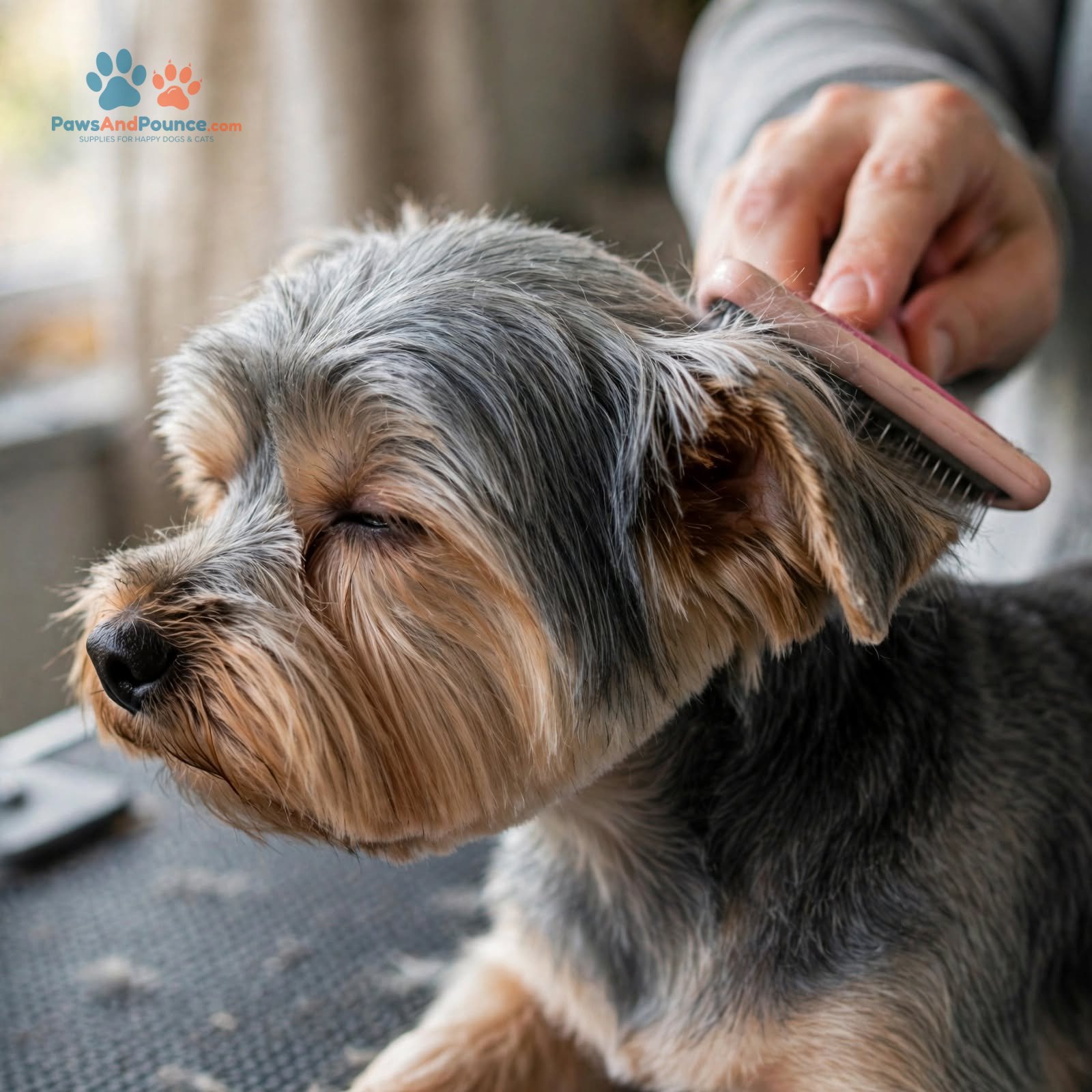
How should you groom a Yorkshire Terrier?
Brush the coat regularly enough that tangles do not become mats, and pay particular attention to friction areas such as behind the ears and under the legs. A long coat commonly calls for daily attention. Even with a shorter pet trim, check the hair frequently and confirm that a comb moves through it without pulling. The AKC’s grooming guidance suggests brushing several times weekly or daily depending on the coat, with trims commonly around every four to six weeks. AKC: How to groom a Yorkshire Terrier · PDSA: How often should you groom your pet?
Use tools appropriate for the dog’s fine coat and handle knots gently. If a mat sits tight against the skin, ask a professional groomer for help instead of tugging or cutting close to the skin yourself. Keep nails at a comfortable length, and ask your vet to show you how to brush your dog’s teeth with products made for dogs.
What is the best haircut for a Yorkshire Terrier?
For many companion Yorkies, a practical short pet trim is easier to maintain than a long show coat. There is no single best haircut for every dog: choose one that keeps the dog comfortable and that you can maintain between appointments. Tell the groomer how much brushing time you realistically have and whether hair around the face, feet, or sanitary area is getting dirty or tangled. A “puppy cut” describes a short style, not a haircut reserved for puppies. AKC: Show coat versus pet trim
At what age should a Yorkie puppy be groomed?
Begin gentle handling and short brushing sessions early; a first full grooming appointment is a separate milestone. An AKC puppy-care timeline suggests a first brief professional appointment around 16–20 weeks, provided the puppy is appropriately vaccinated. Ask your veterinarian and groomer to plan the timing for your puppy. Make the early sessions calm and short so handling, bathing, and nail care become familiar rather than frightening. AKC: Yorkie’s first-year training timeline
How much exercise and training does a Yorkie need?
A Yorkie needs daily movement and mental engagement even though the walks may be shorter than those of a large athletic dog. Combine walks with indoor games, sniffing opportunities, and brief training sessions. Adjust the activity for the individual dog’s age, fitness, and weather. Consistent rewards for the behaviors you want are more useful than assuming a small dog will grow out of barking or pulling on its own. AKC: Yorkshire Terrier lifestyle and training
Introduce household sounds, people, and other dogs gradually and safely. If barking becomes frequent, look at triggers and unmet needs rather than treating every bark as stubbornness. For persistent fear, reactivity, or separation problems, ask your veterinarian or a qualified reward-based trainer for individual guidance.
What health issues should a prospective owner ask about?
Ask about dental care, kneecaps, eyes, and the puppy’s family health history. Small breeds, including Yorkies, can have dental problems; veterinarians also discuss concerns such as luxating patellas, tracheal collapse, and low blood sugar in very young or unusually small puppies. A possibility is not a diagnosis: a veterinarian should assess the individual dog. For breeding stock, the AKC lists patella and ophthalmologist evaluations among the national breed club’s recommended tests. AKC: Yorkshire Terrier breed health information · PetMD: Yorkshire Terrier health and care
If you are considering a puppy, ask to see the parents’ relevant health test results and discuss vaccination, feeding, and dental plans with your veterinarian. If an existing dog develops a persistent honking cough, breathing trouble, repeated skipping on a hind leg, or difficulty eating, arrange veterinary care rather than trying to identify the cause from a breed guide. Breathing difficulty calls for urgent veterinary attention. PetMD: Collapsing trachea in dogs
Would a Yorkshire Terrier fit your home?
The useful test is whether your daily routine matches the dog, not whether your floor plan is large enough. These situations show where a Yorkie may fit and what needs planning:
| Your household | What to consider |
|---|---|
| Apartment with time for daily walks and play | The space can work. Plan for training around alert barking and make sure the dog has activity beyond being carried. |
| Busy household wanting a low-effort coat | A short pet trim helps, but brushing, dental care, and repeat grooming appointments still take time. |
| Family with very young children | Close adult supervision and gentle handling are essential for a toy-sized dog. Consider the individual dog’s comfort around children. |
| Home where the dog would spend long periods alone | Think through companionship and care during the day before choosing an individual dog. |
Where should a Yorkie sleep? A healthy adult can share your bed if you both sleep comfortably and the setup is safe. Small dogs can be injured by jumping or falling from a high bed. For a very small puppy, a dog bed or secure sleeping space beside your bed can keep the puppy close while avoiding that risk. Give the dog its own place to rest even if you sometimes share a bed. AKC: Sleeping with your dog · PDSA: New puppy checklist
Before deciding, map the care routine onto an ordinary week: time for coat care, teeth, activity, training, and planned grooming appointments. Include routine veterinary costs. If the plan is realistic, meet individual Yorkies and ask their caretakers about the dog’s behavior and health history. Small size can make a Yorkie convenient to house; daily care determines whether the match works.